Whether you’ve already touched down in Dublin or are visiting in the future, if you’re looking to vacation in Dublin, this guide is for you. From iconic landmarks to hidden gems, we’ll show you the best of what Dublin has to offer, not to mention all the delicious food, the rich culture and fascinating history, as well as the incredible local and international retailers.
And just in case none of what we cover is standing out to you, you can explore more things to do in Dublin on our website.
See the Iconic Dublin Landmarks
Dublin is full of inconic landmarks, with historic buildings like The GPO or The Mansion House, modern artworks like The Spire or The Portal and monuments like the O’Connell Monument or the Jim Larkin Stature, there is history, culture and character in every nook and cranny of Dublin’s city street.
Trinity College & The Book of Kells
Trinity College is located just a stones throw away from the Liffey on the South Side of Dublin.
Trinity is one of Ireland’s major universities, getting around 4,000 new students every year for a total of around 24,000 students and has been a working university since 1592.
Trinity is also home to The Book of Kells, which is a famous 9th-century manuscript containing the 4 Latin Gospels. It is renowned for its intricate details and artwork as well as its durability, being over 1,000 years old.
Trinity has a beautiful campus, so it gets pretty busy around lunch time, therefore, we suggest heading for Trinity at around 4 or so when it’s more relaxed.
The GPO:
The GPO (General Post Office) is located right in the middle of O’Connell Street in the heart of the city.
The GPO is hugely important in Ireland’s history, it was the rebels headquarters during the 1916 Easter Rising and survived military shelling as well as an array of gunfire, the bullet holes of which is still visible to passers-by to this day.
It was also outside the GPO where the Proclamation of the Irish Republic was read out by Pádraig Pearse, which was a vital moment in Ireland’s struggle for independence.
If you’re interested in the GPO history, you’re in luck, because they have their very own museum right as you step in the front doors! And if you’re more interested in the architecture or photography, you can get the perfect angle by standing on the island in the middle of O’Connell Street to try and get the perfect pic.
Molly Malone:
Molly Malone is located on Suffolk Street and is a Dublin icon.
She is most well known from the song of the same name, which tells the story of a fishmonger who works by pushing her wheelbarrow through the Dublin streets before passing away due to a sudden fever and haunting those same streets as a ghost.
Historians have’nt found any concrete evidence that Molly was a real person, but her story shines a light on the harsh life of working class Dubliners in the 17th and 18th century.
Molly Malone is in a more secluded section of the city, so getting photos shouldn’t be too tricky, but as a general rule, any time from 12 pm to 2 pm would be the busiest times for sightseeing.
River Liffey:
The River Liffey runs all the way through the middle of Dublin, and divides the county into North and South.
People have long been living in and around the banks of the Liffey including neolithic farmers and fishermen, the Vikings and the British, because it could very easily be used as a trading hub and it offered a natural harbour.
Fun Fact: The River Liffey provides around 85% of Dublin’s drinking water!
The Custom House:
The Custom House is located right on the River Liffey, on Custom House Quay.
The Custom house is one of Dublin’s most important buildings, not only is it a marvel of Dublin architecture, but it is also headquarters for the Department of Housing, Local Government and Heritage.
The Custom House was also a key figure in the Irish war of independence as it was being used as a headquarters for British customs, excise and local government. It was burned down in 1921 because of this fact and was rebuilt from 1924 to 1930.
If you have decide to head to The Custom House, remember, The Custom House is still a functioning government building, so don’t be getting too rowdy!
Eat Like a Local:
Traditional Irish Dishes:
The classic dishes of Ireland may not be known worldwide, but that doesn’t mean you shouldn’t give them a try, if you’d like to look for restaurants to try some of the dishes, you can check out DublinTown’s restaurant and food hub.
Stew:
Irish stew is a staple of Irish cuisine, it’s a very simple dish made up of lamb, potatoes, onions, carrots, water or stock and seasonings (whis is most commonly just salt, pepper and herbs)
Much like dishes such as ratatouille or goulash, Irish stew was born out of the fact that Irish people didn’t have the money to afford much food or cookware, so a meal made with cheap ingredients that could be cooked in a single pot was a game changer.
Shepard’s Pie:
Shepards Pie is a classic Irish & British comfort food that is made with a bottom layer of minced lamb, diced onions, carrots and peas with gravy, and is covered by a top layer of mashed potato.
The origins of the dish come from home cooks in Britain and Ireland looking for ways to use up all of the leftovers that they had from previous dinners, and fun fact, originally spehard’s pie was made with a thick layer of pastry as opposed to mashed potato.
Dublin Coddle:
Coddle is a dish that you won’t find very often, but that doesn’t take away from it’s deliciousness. Coddle is another one-pot dish that’s made by simmering sausages, rashers, potatoes and onions in water/stock and has become a staple of Dublin cuisine.
Must-try snacks and sweets:
Ireland is known for many things worldwide, but we don’t get nearly enough credit for some of our delicious snacks. Some snacks that you won’t want to miss if you visit are:
Tayto – The staple of Irish crisps, Tayto’s cheese and onion crisps may be our best creation, simple, delicious & filling, they’re the perfect snack. Fun fact, Tayto were the very first to make pre-seasoned crisps, before Tayto, crisps would be sold with a blue sachet of salt inside.
Mikado – Mikados are an iconic Irish biscuit made with two rows of fluffy marshmallow, a line of raspberry jam and a healthy serving of coconut shavings on top. They go perfect with a cup of tea or as a quick treat.
Murphy’s Ice cream – Murphy’s Ice cream is among the best you’ll ever have. It is made with dairy from specific Kerry cows, organic sugar and sea salt derived from the beaches of Dingle, Co Kerry. The flavours that they are known for are Dingle sea salt, Brown Bread, Butterscotch or Irish coffee, as well as having delicious seasonal flavours and sorbet.
Experience Dublin’s Live Music & Pubs
Dublin is a haven for live music, from the biggest stages to the pub floors, there’s no shortage of incredible artists about and an endless amount of live music.
If you haven’t got your fix of live music, here are some of the spots we think you should check out.
Live Trad music pubs:
The Celt is a traditional pub on Talbot Street. They have live music every single night and aren’t as busy as spots like Whelan’s.
The Flowing Tide is a traditional pub on Lower Abbey Street. They regularly host live music on Saturdays and occasionally host weekend sets.
McNeill’s is a traditional pub on Capel Street. They have live trad music all week, they also double as a music shop and have a music centre on the second floor.
Nightclubs/Dance Clubs:
SoHo Dublin is an over-21s late bar and nightclub on D’Olier Street. They host a wide array of music acts, from 90’s R&B and hiphop to afrobeats or classic rock.
The Grand Social is an award-winning concert and club space on Liffey Street Lower. They’ve hosted names like Primal Scream, Picture This and many more.
Café en Seine, on Dawson Street, hosts everything from calming acoustic sessions to high-energy EDM, as well as jazz brunches and more.
Twenty Two is an exclusive late-night venue, bar, nightclub & theatre on South Anne Street. They frequently host DJs, live musicians and an array of other performances.
To see more of the pubs/clubs in Dublin check out the Dublin nightlife guide.
Dive Into Culture & History
Dublin has history and culture galore, and there’s no better way to experience it than by checking out some of the museum around town. If you’re looking for suggestions, we highly recommend:
National Gallery of Ireland:
The National Gallery on Merrion Square west has an impressive collection of over 16,000 European and Irish artworks. They have pieces such as The Taking of Christ, Still Life with a Mandolin and Lady Writing a Letter with her Maid. Entry is completely free of charge and requires no booking, and there are also free guided tours every weekend.
Viking Splash Tour:
The Viking Splash is THE Dublin activity. Take a trip around Dublin in a half bus half boat vehicle as you learn about Dublin’s iconic buildings, the Vikings and how they settled in Dublin, in a completely one of a kind guided tour.
EPIC The Irish Emigration Museum:
The EPIC museum has 20 themed galleries that will teach you all about the story of Ireland’s 1,500 years of emigration and the impact that the Irish diaspora had on the world.
EPIC has a number of interactive activities/quizzes all about Ireland’s history that are perfect for the little ones. They also have self-guided tours that are approximately 90 minutes long.
The tickets at EPIC are €22 for adults & €11 for children.
Little Museum of Dublin:
The Little Museum of Dublin is a people-funded museum focusing on the history and culture of Dublin and the people who call it home. They have over 5,000 artifacts in their posession and each one was donated by a member of the public.
The museum is a guided experience, with each tour taking around 30 minutes. Tickets are €18 for adults and €16 for under 16s, but tickets sell out fast so we recommend booking in advance on their website to avoid any upset.
If none of these spots are sticking out to you, then you can find more museums and clutural hubs on our website.
Shop Irish & International
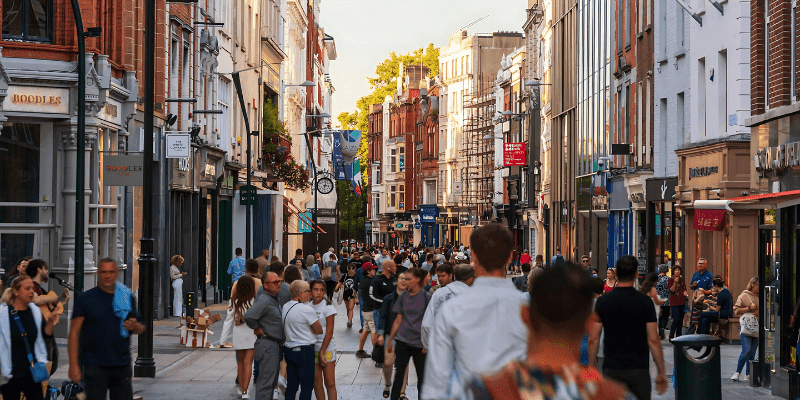
There are endless shopping opportunities in the City centre, from the iconic, international names to the quaint, chic boutiques.
Drury Street
Drury Street was once a hub of butchers’ shops and clothing factories; read the history of Drury Street. Now it is a fantastic stop if you’re interested in seeing the independent boutiques, vintage fashion and Irish designs that Dublin has on offer. Here are some of the shops that we think can’t be missed if you find yourself on Drury Street.
-
- Jenny Vander is a vintage clothing and jewellery boutique. They are run by the mother-daughter duo of Gail and Sally Kinsella.
- Oliver Bonas is an independent womenswear retailer, they are known for their bold and unique designs and colourscapes.
- Thirty Five Vintage is a pre-loved vintage clothing boutique. What started out as a Depop and Instagram venture during lockdown has turned into a fully-fledged business and hub for community.
Henry Street
Henry Street is a retail haven, it is fully pedestrianised, it has an incredibly diverse selection of shops and it’s only a hop, skip and a jump from the Luas lines, the GPO and the River Liffey. If you’re on Henry Street, check out:
-
- MANGO is a premium multinational fashion retailer from Spain. They sell everything from casual wear to dresses/suits to kids wear and shoes.
- Lush Cosmetics is famous for their bath bombs, their incredible hair and skincare products and treatments, as well as their passion for sustainability and animal wellfare.
Grafton Street
Grafton Street is Ireland’s premier high-street retail destination. Known for it’s vibrant atmosphere, historic charm, and world-class street performers, as well as it’s marquee attractions like Brown Thomas or hidden gems like Bewley’s upstairs theatre. If you go for the unparalleled atmosphere of Grafton Street, we think you’d remiss if you didn’t check out:
-
- Brown Thomas is Ireland’s iconic luxury department store. Whether it’s designer clothes, underground brands or high-quality cosmetics you’re looking for, Brown Thomas is the place to go.
- Claddagh Jewellers is one of the premier Irish jewellery makers. They sell everything from earrings to wedding rings and, of course, the iconic Claddagh ring.
George’s Street Arcade
George’s Street Arcade is Ireland’s first ever purpose-built Victorian shopping centre. They are home to over 40 indpendent businesses with everything from inedpendent fashion to jewellers to Tarot reading. Some of their independent businesses are:
-
- Spindizzy is a record shop and music retailer that was founded in the 90s. They sell everything from the latest records to t-shirts! And they even host live music in their venue with all kinds of local and international acts.
H2: Take a Scenic Walk or Photo Tour
While we may not be known for it, Dublin has an extensive number of beautiful and scenic spots that most tourists would never think to check out, if you’d like to stretch your legs and see how picturesque Dublin can be, you can check out:
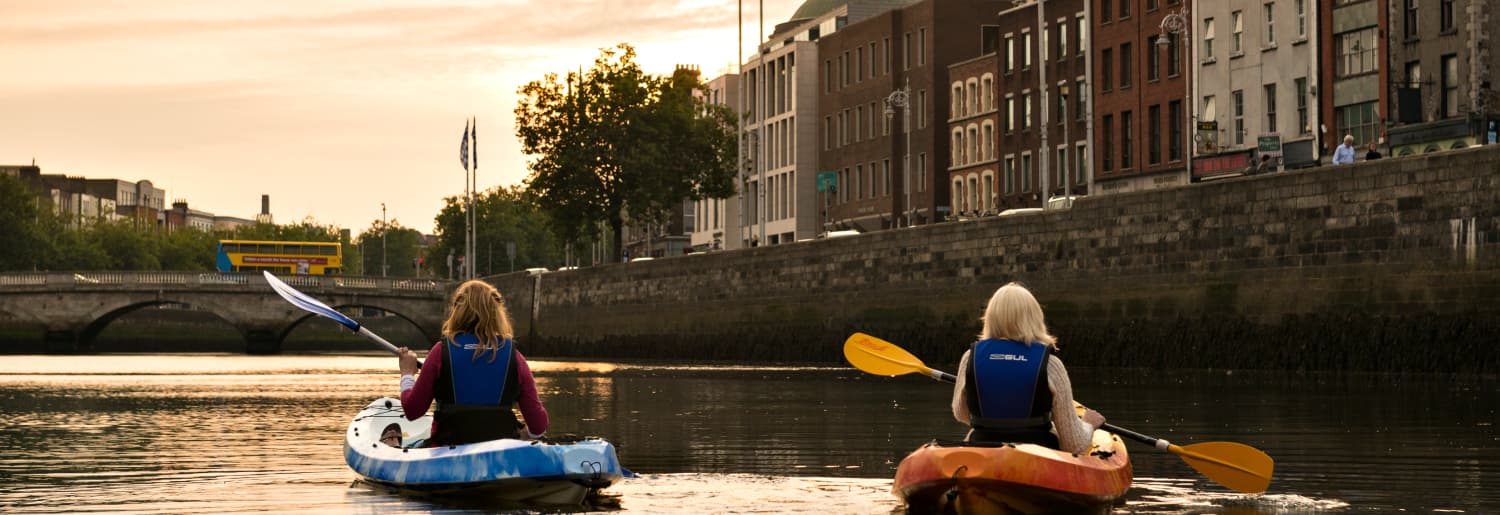
Walking along the boardwalk by the Liffey is an amazing way to see more of the city, experience Dublin’s culture and get the opportunity to get some people watching done. It is also a beautiful view if the sun is setting, so if you’re a photographer, you’ll know wehere to go.
Stephen’s Green is the perfect spot for a little stroll. With wide open spaces, beautiful greenery and flowers and a relaxing atmosphere, it’s the perfect place to take a little break while you’re around and about in Town.
There are a plethora of breathtaking rooftop views in Dublin, but our recommendations would have to be:
Díon, a rooftop restaurant and cocktail bar on Dame Street with a gorgeous 360-degree view.
Guinness Gravity Bar, located on top of the Guinness Storehouse at St. James’s Gate, the Guinness Gravity Bar is where you go to drink your pint in style, with a 360 degree view of the city, perfect pints and a collection of original Irish artworks, it doesn’t get more true to home than this.
Map: Must-Do Spots in Dublin City Centre
Haven’t found what you’re looking for?
If you’d like to see more of what Dublin has on offer, you can check out the following links to our website.
And there you have it, with a warm atmosphere, a cheery people and and endless amount of culture, art, creativity and history, Dublin is an unbeatable holiday spot, besides all the hectic weather we get.
There’s simply too much to do in Dublin to get it into one post, so if you aren’t sure what to do, my personal recommendation is to just walk around and see what’s going on.
FAQ:
-
What are the must-do activities in Dublin for first-time visitors?
Start with Trinity College and the Book of Kells, then walk to the GPO on O’Connell Street to see the 1916 bullet holes. Check out museums like the free National Gallery of Ireland or the Little Museum of Dublin, catch a live trad session at The Celt or McNeill’s, and finish with a stroll down Grafton Street or Henry Street.
-
What are the most famous landmarks in Dublin City Centre?
The GPO, the Spire, Trinity College, the Ha’penny Bridge, the Custom House, Dublin Castle and the Molly Malone statue on Suffolk Street are the city centre’s best-known landmarks. Most are within a short walk of each other.
-
Where should I eat as a first-time visitor?
Try Irish stew, Dublin coddle or a full Irish breakfast for a traditional meal. For snacks, grab a bag of Tayto cheese and onion crisps, a Mikado biscuit, or a scoop of Murphy’s Ice Cream. Or you can browse DublinTown’s food and drink guide for restaurants.
-
What’s a good mix of history and fun in Dublin?
Viking Splash Tours combines a city tour with a trip onto the water in an amphibious vehicle. EPIC The Irish Emigration Museum has interactive galleries suited to families, and the Little Museum of Dublin’s 29-minute guided tour is packed with humour.
-
Is Dublin city centre Walkable?
Yes. Most of the main sights, shopping streets and pubs in this guide are within walking distance of each other, and the Luas tram lines cover longer hops across the city centre.