About
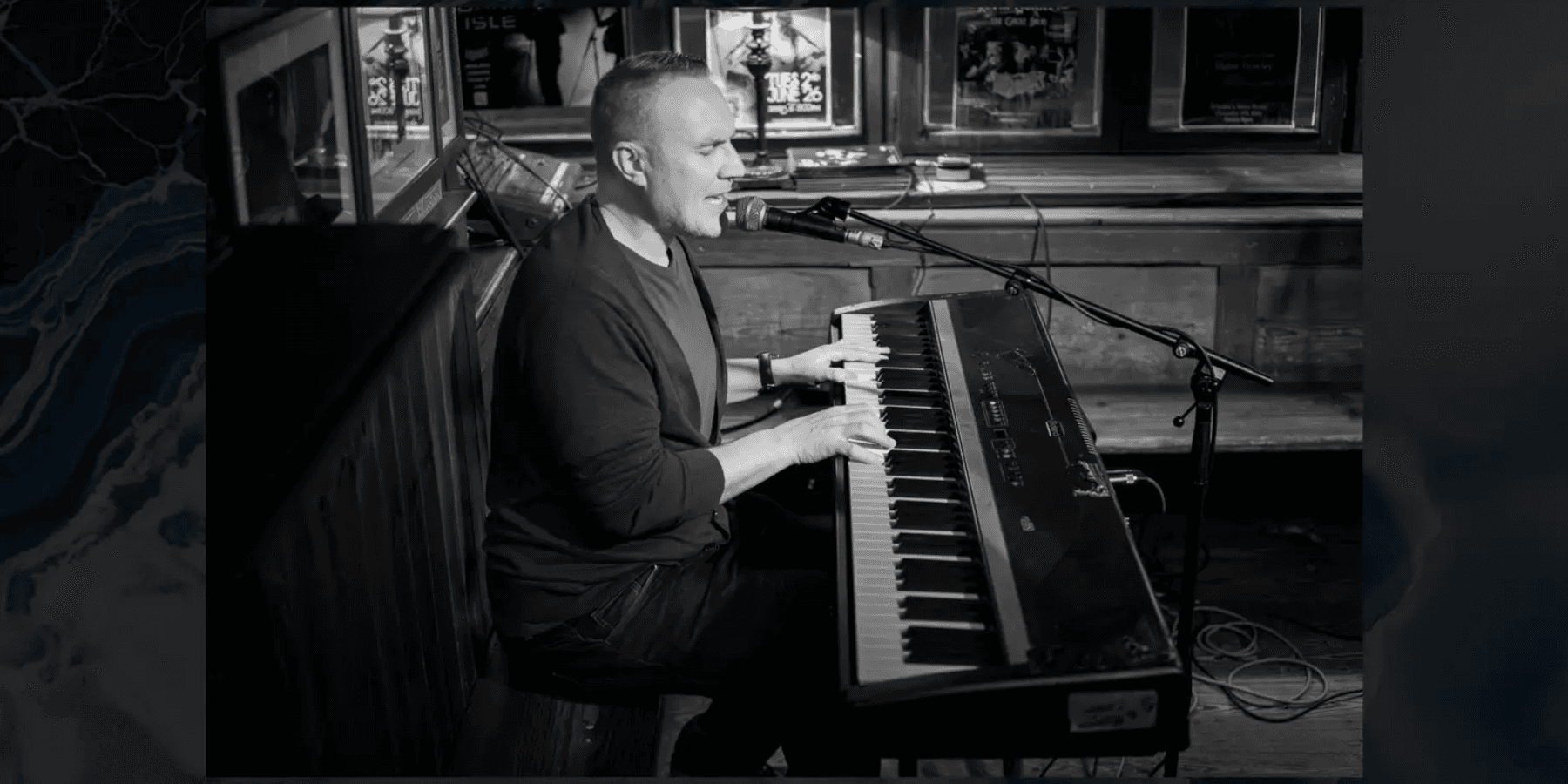
Corey Sanders, aka Dirty Blond, stepped up to the mic at a recent sold-out gig with a grin and a warning. ‘Are you having a good night? Good — because I’m going to ruin it.’ The crowd laughed. Then he played. And instead of killing the mood, he tightened it…
Corey Sanders, aka Dirty Blond, stepped up to the mic at a recent sold-out gig with a grin and a warning. ‘Are you having a good night? Good — because I’m going to ruin it.’ The crowd laughed. Then he played. And instead of killing the mood, he tightened it —a roomful of strangers locked into the same feeling, singing back every bruised lyric like it belonged to them.
That’s the trick: the heavier the heartbreak, the stronger the connection. In Corey’s hands, melancholia doesn’t isolate , it unites. That tension — sorrow turning into connection — sits at the heart of Dirty Blond. The songs are bruised and vulnerable, but in a live setting they feel expansive, even euphoric. There’s comfort in the candour, in the shared recognition of something difficult but true. It’s no surprise that audiences keep growing, both in rooms and online. Hailing from Wales — ‘the land of music and magic,’ as he fondly calls it — Corey has been steadily building towards this moment.
With an album due later this year, he’s been sharing a run of stripped-back sad songs on TikTok, quietly amassing tens of millions of likes and an increasingly devoted following. The online rise tells one story. The real one, though, is happening in real time, in packed-out venues where heartbreak somehow makes everyone feel a little less alone. The John Lennon adage ‘Life is what happens when you’re making other plans’ landed hard for Corey after his relationship fell apart. He had bought a home and a ring while his partner was quietly making plans of her own, ultimately leaving for the United States.
Raised in Bridgend, Corey describes a happy childhood, loving parents, and a close bond with his brother. Yet he still refers to his hometown as ‘a place where there are monsters under the bed.’ Though the coal mine closures occurred long before he was born, their impact rippled through generations, compounded by more recent tragedies that cast long shadows over the community. At school, Corey wasn’t academically inclined, but music offered a way out. He taught himself piano and guitar, writing songs from the age of twelve. When a teacher explained he could earn a GCSE through song writing, it was revelatory. ‘Until then, I felt like there was no way of getting out,’ he admits, reflecting on the creative constraints of a working-class town weighed down by low expectations.
At fourteen, he formed his first band. By seventeen, he had signed a publishing deal. At eighteen, he moved to north London, living in a garage for two years on stacked mattresses while friends occupied the house above. After a breakup with his school sweetheart, he wrote ‘You Are the Reason’ — the cinematic tearjerker that would become a global hit for Calum Scott. Many song writing successes followed. Today, Corey’s songs have amassed more than nine billion streams, but now he’s ready to step out from the studio and into the spotlight. So why the sadness? And is it personal, or cultural? ‘It’s the DNA of where I grew up — trapped in its melancholia,’ he says. ‘In Wales, people sing in pubs, but they don’t jump around like they do in Ireland.’
Reflecting now, Corey sees his roots differently. ‘I spent my whole life trying to escape. Now I see it as something beautiful and damaged. I want to write songs for the people — to give them new songs to sing in the pub, after they’ve finished Delilah.’ Healed from the end of his last relationship, Corey has since found love again. Alongside the sadness, the album also holds space for songs that don’t deny the damage — but still dare to open the door once more. Ultimately, these songs are about storytelling as catharsis: shared pain, nostalgia, healing — and the hope that quietly emerges in the aftermath.